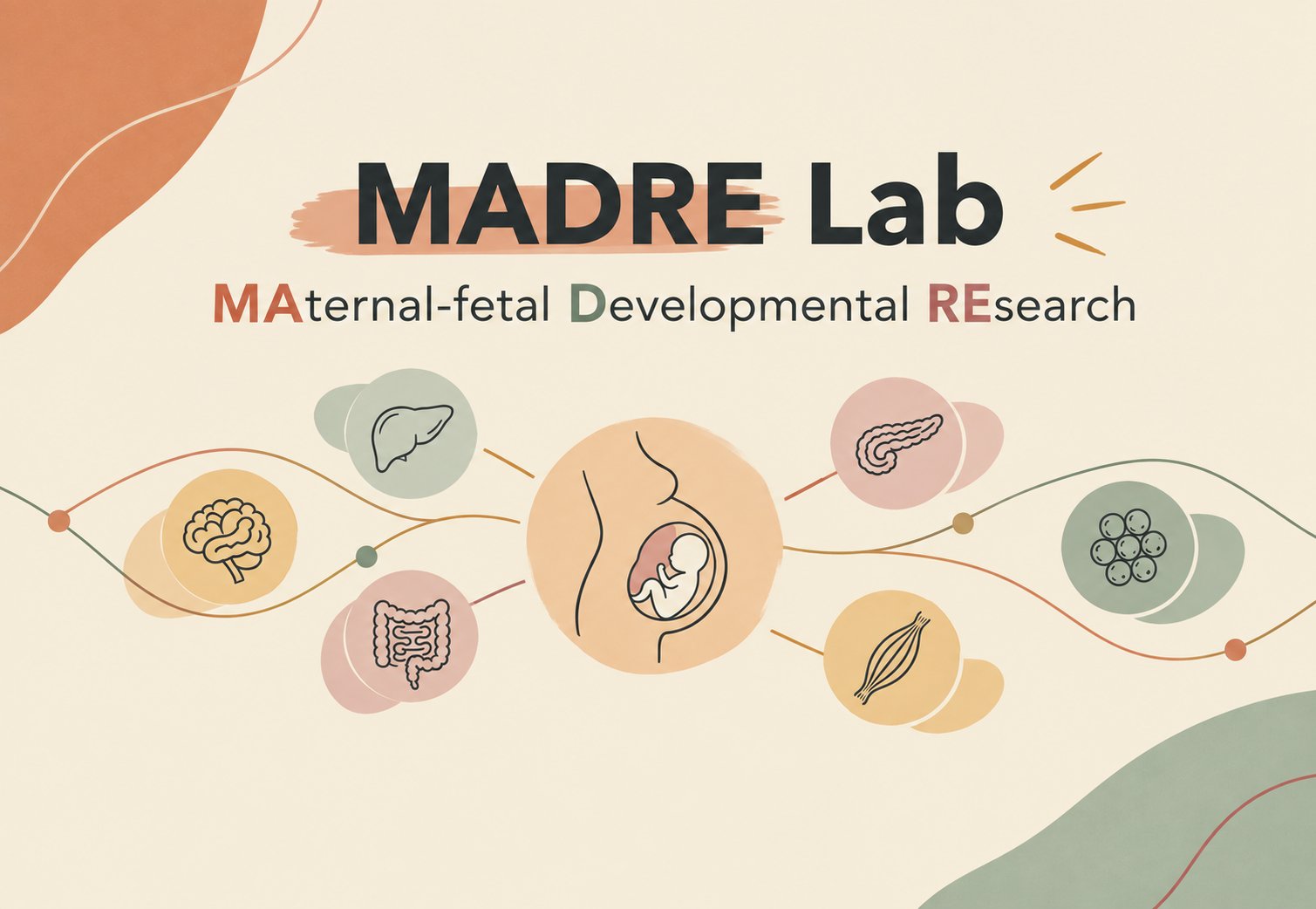
MADRE Lab — MAternal–fetal Developmental REsearch. Illustration of a pregnant mother connected to the liver, pancreas, brain, gut, muscle and cells.

Exploring how the placenta connects mother and fetus, and how pregnancy shapes lifelong health, through physiology, metabolism and developmental biology.

  • Placenta
  • Physiology
  • Metabolism
  • Pregnancy
  • Developmental Programming
  • Therapeutics

Department of Physiology, School of MedicineUniversidad Autónoma de MadridInstituto de Investigaciones Biomédicas Sols-MorrealeCSIC-UAM

Why the placenta?

One organ, seven jobs

For nine months, this temporary organ does the work of almost every organ the fetus has yet to develop, all at once.

Mother Placenta Fetus

Like a matryoshka

We see and study pregnancy as a whole: mother, placenta and fetus, always together. Like matryoshkas, the Russian nesting dolls carved from a single block of wood and a traditional symbol of motherhood and fertility, each one sits inside the other and shapes the next.

Research

What we study

Pregnancy is a conversation between organs. We follow that conversation from the mother's own early life, through the placenta, to the long-term health of her offspring, with a special interest in the signalling pathways that control metabolism. We combine in vivo models and physiology with state-of-the-art approaches such as proteomics and sequencing. Much of our work relies on mouse models, always under approval from our institutional ethics committees and following the 3Rs principles: Replace, Reduce and Refine (Transparency Agreement on the use of animals in research). Our main lines of work include:

Metabolic imprinting

Does a mother's metabolism early in life shape her future pregnancies?

Metabolic disease early in life, such as overnutrition in infancy or obesogenic diets, can leave a lasting imprint on the body. Using animal models, we study how this imprint alters metabolic organs and, later in life, the formation and function of the placenta when these females become pregnant.
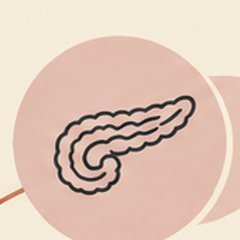
Maternal adaptations

How does the mother's body adapt to pregnancy and lactation?

Pregnancy remodels virtually every organ in the mother's body to support the growing fetus. We investigate how these adaptations are orchestrated, how the placenta takes part, and what happens to maternal health when they fail.

Therapeutic strategies

Can we protect mother and offspring during pregnancy?

We test ways to protect mother and fetus: drugs such as sildenafil citrate, nutritional approaches like the Mediterranean diet and sustainable insect-based nutraceuticals (GREEN-MED project), beneficial gut bacteria such as Bifidobacterium breve, and stress-reduction programmes such as mindfulness during pregnancy.

People

The team

A young, growing group at the Universidad Autónoma de Madrid and the Instituto de Investigaciones Biomédicas Sols-Morreale (IIBM, CSIC-UAM).

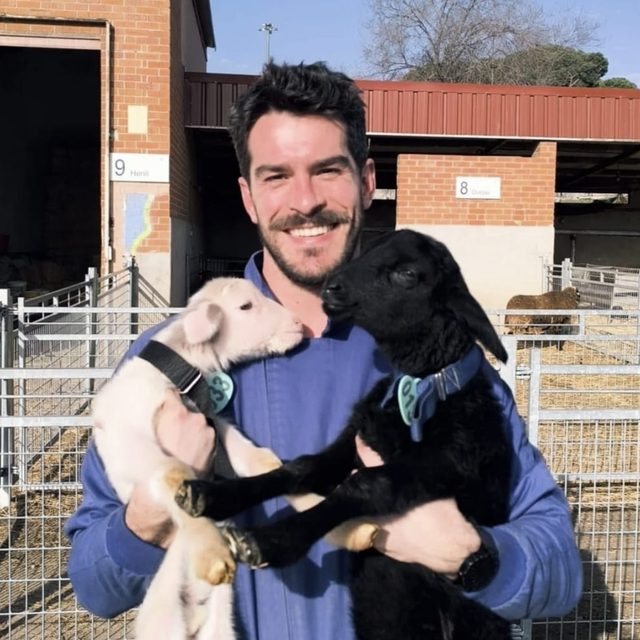
Jorge López-Tello holding two lambs at a university farm
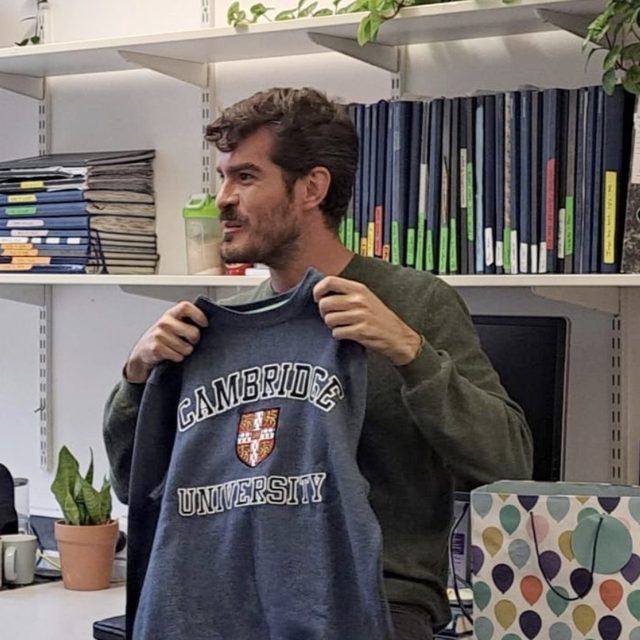
Jorge López-Tello in the lab holding a Cambridge University sweatshirt
At the Centre for Trophoblast Research, Cambridge

Jorge López-Tello, DVM, PhD

Principal Investigator · César Nombela Group Leader

Jorge trained as a veterinarian and did his PhD at the Complutense University of Madrid, studying fetal growth restriction. In 2015 he joined Prof. Amanda Sferruzzi-Perri's lab at the Centre for Trophoblast Research, University of Cambridge, as a visiting PhD student. He then stayed on as a postdoc, funded first by a Royal Society Newton International Fellowship (2018–2020) and then by a Sir Henry Wellcome Postdoctoral Fellowship (2020–2024). In Cambridge he worked on many aspects of placental biology: how the imprinted gene Igf2 lets the placenta control the mother's metabolism, PI3K signalling and nutrient supply to the fetus, placental vascular growth, and the influence of the maternal gut microbiota.

In 2024 he returned to Madrid to start MADRE Lab through the César Nombela Talent Attraction Programme. He sits on the Executive Council of the European DOHaD Society, where he coordinates communications, and is a proud FIRBee: an alumnus of the Frontiers in Reproduction course at the Marine Biological Laboratory, Woods Hole (2018), where he has since returned as an invited speaker.

Mentoring is one of the parts of the job he enjoys most. Over the years he has mentored more than 15 early-career researchers in Cambridge and Madrid, from undergraduate and master's students to PhD students and postdocs.

Awards

  • 2025Finalist, Premio Luis Felipe Torrente de Divulgación
  • 2023Physiological Society Professional Development Award
  • 2022SRF Postdoctoral Scientist Award (also 2020)
  • 2021SRI President's Plenary Award
  • 2021Elsevier New Investigator Award, runner-up (IFPA)
  • 2020Sir Henry Wellcome Postdoctoral Fellowship
  • 2019Society for Endocrinology Early Career Award
  • 2018Royal Society Newton International Fellowship
  • 2018Frontiers in Reproduction (FIR) course, MBL Woods Hole
  • 2018Best Doctoral Thesis Award, Veterinary Faculty (UCM)
  • 2016Best Speaker Prize, PDN Symposium, University of Cambridge

Students

Lucía Rodríguez Calleja

PhD student

Lucía Sánchez Real

Technician student (FP)

Javier Cortés Hormigos

Undergraduate student

Sheila Milagros

Undergraduate student

Esther Suárez

Undergraduate student

AlumniNuria Barba Martínez · Cristina Lozano del Valle (UAM, 2026) · Estíbaliz Roldán Gómez-Calcerrada · Sandra Martín Romo (UAM, 2025) · and more than 12 students mentored at the University of Cambridge

Publications

Selected publications

Need access to a paper? Don't hesitate to reach out.

Outreach

Science for everyone

What happens in the womb matters to everyone. We write for the public, talk to the media and bring the placenta into schools.

Writing for the public

In schools and universities

Science Week activities for primary school pupils in Cambridge and hands-on workshops for undergraduates in Madrid.

News

Latest

European DOHaD Conference, Munich

Jorge was part of the organising committee of the European DOHaD Society Conference, with more than 180 attendees.

Four new papers

Our latest work covers mindfulness during pregnancy (Placenta), the Mediterranean diet and placental lipids (Scientific Reports), the TRPV2 channel (Nature Communications) and IRS2 in placental development (Stem Cell Reports).

GREEN-MED project funded

Our national project on eco-friendly nutraceuticals for maternal health and embryonic development has been funded by the Spanish Research Agency.

Join us

Curious about the placenta?

We are always looking for motivated people who want to understand how life before birth shapes health for a lifetime. If our questions excite you, write to us with your CV and a few lines about your interests.

Contact

Find us

Email

jorge.lopeztello@uam.es

Address

Department of Physiology
School of Medicine, Universidad Autónoma de Madrid
C/ Arzobispo Morcillo 4, 28029 Madrid, Spain

Elsewhere

Google Scholar · ORCID
NCBI My Bibliography